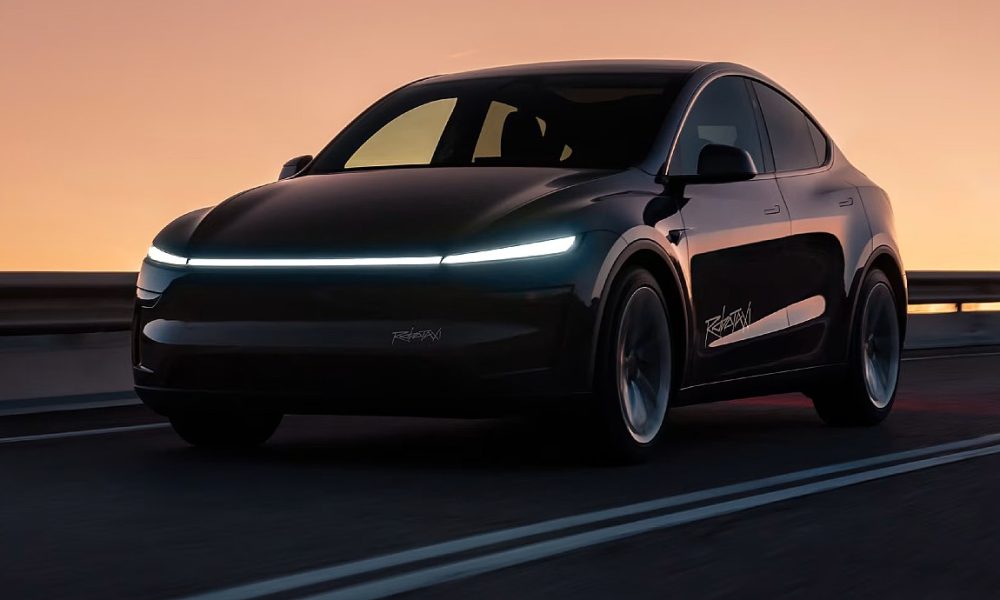
The AI Revolution at Tesla's Core: Why Robotaxis Dominate 52% of its Valuation
Tesla, once primarily lauded as the pioneer of electric vehicles, is increasingly being redefined in the eyes of investors and Wall Street analysts. The narrative has dramatically shifted: no longer just an EV manufacturer, Tesla (TSLA) is now unequivocally an AI company, with its ambitious robotaxi program at the very heart of its future valuation. Recent insights from Bank of America highlight this profound transformation, attributing a staggering 52% of Tesla's overall valuation to its burgeoning robotaxi division. This isn't just a slight adjustment; it's a radical re-evaluation that underscores the immense belief in the company's autonomous future, even as traditional car sales face headwinds.
This pivot comes at a critical juncture. While Tesla’s stock has demonstrated resilience, holding onto recent gains with a notable 0.84% uptick to $422, its journey has been marked by volatility. A slight 2.9% increase year-to-date, from $410 in January, masks a significant dip and recovery earlier in the year, partly attributed to slowing EV sales and external factors. However, the renewed focus on AI, particularly the exciting prospects of Tesla Robotaxi Expansion: Doubling Austin Fleet and New Cities, is providing fresh impetus and optimism for investors.
The Shifting Sands: From EV Leader to AI Pioneer
For years, Tesla commanded the electric vehicle market, synonymous with innovation and setting industry benchmarks. However, the global automotive landscape is evolving rapidly, with intensifying competition and a slowdown in EV adoption in key markets like Europe and the United States. This has led to a significant re-evaluation of Tesla's core business model. As its car sales have fluctuated, at times even costing it the title of the world's largest EV seller, investor attention has naturally migrated to where the true disruptive potential lies: its advanced artificial intelligence capabilities.
Wall Street's shift in perspective is palpable. Analysts now view Tesla not merely as a car company that happens to make AI-driven vehicles, but as an AI company leveraging its automotive platform to deploy groundbreaking autonomous technology. This perspective is vital, as it frames Tesla's future growth not solely on units sold, but on the scalability and profitability of its AI-powered services. The vision of self-driving EVs operating as a vast, efficient network of robotaxis is seen as the primary catalyst that will propel Tesla and its stock price to unprecedented heights.
Quantifying the Future: Robotaxis and Tesla's Valuation
The extent of this strategic shift is perhaps best encapsulated by the recent analysis from Bank of America. After resuming coverage on Tesla stock with a bullish "buy" rating, the firm delivered a compelling set of projections that underscore the transformative impact of robotaxis. Their new 12-month forward price target for Tesla stock stands at a confident $460, implying a healthy 13% upside from current levels and surpassing the average Wall Street forecast of $421.60.
The Power of 52%
The most striking revelation from BofA's research is the allocation of 52% of Tesla's overall valuation to its robotaxi business. This figure is not just significant; it's more than double the previous low estimates and signals a profound shift in how the market values the company. For investors, this number represents a powerful endorsement of Tesla's AI strategy, suggesting that the autonomous ride-hailing service is perceived as the company's dominant long-term growth driver, overshadowing even its core vehicle manufacturing.
What does this 52% signify? It implies that analysts foresee massive future revenue streams from a fully autonomous robotaxi network. The potential for high-margin software services, reduced operational costs (no human drivers), and global scalability presents a far more lucrative opportunity than traditional car sales. It positions Tesla as a leader in a potentially trillion-dollar autonomous mobility market, rather than just another player in the highly competitive automotive sector. This belief system, often summarized as "In Elon (And Robotaxis) We Trust," highlights the market's conviction in Tesla's ability to execute this ambitious AI-driven future.
Tesla's Robotaxi Roadmap: Expansion and Evolution
Elon Musk's pronouncements frequently fuel market excitement, and his recent updates on Tesla's robotaxi program are no exception. The company is not merely hypothesizing about robotaxis; it's actively deploying and expanding its service. Tesla Robotaxi Progress: From Austin's Launch to Broad Expansion began in June with Austin, Texas, serving as the inaugural test market. This initial launch, though successful, wisely included safety drivers in each vehicle, ready to intervene if the AI encountered difficulties – a testament to a cautious yet ambitious rollout.
Rapid Deployment and Future Ambitions
Following a successful initial phase, which saw expansion to the San Francisco Bay Area, Musk has signaled a dramatic acceleration. He announced plans to double the number of robotaxis in service for Austin by December, showcasing a commitment to rapid scaling. This aggressive timeline is just the beginning, as Tesla intends to expand its robotaxi service to approximately eight more metropolitan areas before the end of 2025. This rapid expansion is critical for accumulating vast amounts of real-world driving data, which is essential for refining and enhancing the AI's capabilities.
Of course, the journey hasn't been without its bumps. Early reports from the robotaxi service in Austin and the Bay Area have included isolated incidents such as vehicles exceeding speed limits, veering across lanes, or dropping passengers at incorrect destinations. While these are mostly scattered problems, they underscore the complexity of achieving truly autonomous driving and the ongoing need for refinement. Tesla, in its characteristic iterative approach, is continuously making adjustments to the onboard AI computers, ensuring the service runs more smoothly as the number of vehicles and service areas expand. Safety monitors remain a crucial component during this evolutionary phase, acting as a vital safeguard.
Beyond Robotaxis: A Broader AI Ecosystem
Tesla's AI ambitions extend beyond just self-driving cars. The company is actively pursuing permits for a ride-hailing service in Arizona, signaling a broader strategy to integrate its autonomous technology into various transportation solutions. Furthermore, Tesla's development of AI robots, known as Optimus machines, indicates a larger vision for artificial intelligence to perform a variety of tasks in both home and workplace environments. These Optimus robots are already in production and could potentially roll out to the market as early as next year, creating an even more expansive AI-driven ecosystem around the Tesla brand.
Navigating Volatility: Tesla Stock and the AI Hype Cycle
Tesla's stock performance has always been a subject of intense scrutiny, and its recent trajectory reflects both the immense optimism surrounding its AI ventures and the inherent volatility of the tech market. While the stock is up slightly year-to-date, it experienced a sharp decline in April, attributed by some to Elon Musk's external engagements and, more broadly, to poor EV sales. The recovery since then has been robust, but the early part of 2026 also saw a 13% year-to-date drop, contending with mounting skepticism around AI and a broader market rotation out of market-leading tech names.
This seesaw behavior highlights the complex dynamics at play. Investors are clearly willing to bet big on Tesla's AI future, as evidenced by the Bank of America report and the stock's ability to recover. However, the path to fully realized autonomy is challenging, fraught with technological hurdles, regulatory complexities, and public trust issues. The "AI hype cycle" can lead to rapid gains but also swift corrections if progress doesn't meet elevated expectations. For investors, understanding that a significant portion of Tesla's value is now tied to a speculative, albeit highly promising, technology requires a nuanced perspective.
Conclusion
Tesla's journey from an innovative EV manufacturer to a leading AI company, with robotaxis forming the backbone of its future valuation, represents one of the most compelling narratives in modern finance. The Bank of America's assessment, which attributes a dominant 52% of Tesla's valuation to its robotaxi division, is a clear signal that the market's focus has decisively shifted. While the company continues to refine its autonomous technology, address challenges, and execute an aggressive expansion plan for its robotaxi service, the potential for high-margin recurring revenue and global scalability remains a powerful draw. As Tesla continues to double down on its AI strategy, from rapidly expanding its Austin robotaxi fleet to developing Optimus robots, its stock will undoubtedly continue to be a bellwether for the broader autonomous revolution, offering both immense opportunity and significant risks for those navigating the cutting edge of artificial intelligence.