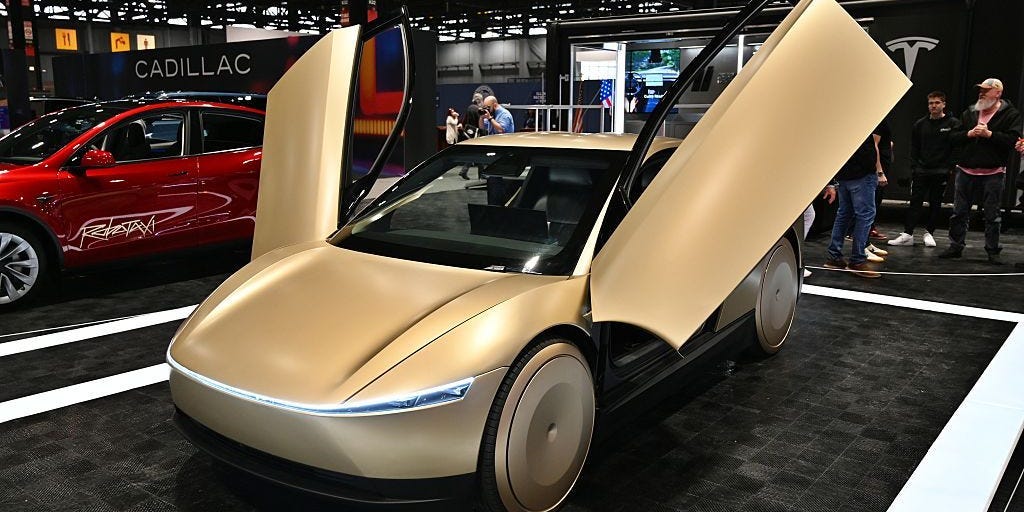
Tesla's ambitious journey into autonomous driving is rapidly accelerating, with its robotaxi service emerging as a pivotal driver for the company's future. What began as a controlled experiment in Austin is quickly evolving into a broader expansion strategy, signaling a significant shift in Tesla's identity from a mere electric vehicle manufacturer to a front-runner in artificial intelligence and mobility services. The emphasis on scaling tesla robotaxi numbers highlights a strategic move designed not only to revolutionize urban transportation but also to redefine the company's financial trajectory.
The Genesis of Tesla Robotaxi: Austin's Pioneering Role
The story of Tesla's robotaxi service officially began in June, with Austin, Texas, serving as the inaugural testing ground. This initial launch was a crucial step, allowing Tesla to deploy its automated vehicles in a real-world urban environment, albeit under controlled conditions. Each vehicle was equipped with a safety driver, whose primary role wasn't to navigate but to act as a crucial fail-safe, ready to intervene if the AI encountered any unforeseen challenges. This measured approach allowed Tesla to gather invaluable data, fine-tune its algorithms, and incrementally improve the system's robustness.
Despite the inherent complexities of rolling out cutting-edge autonomous technology, the Austin launch was largely deemed a success. Initial difficulties, as is common with pioneering tech, were noted but were mostly isolated incidents rather than systemic failures. This early triumph provided Tesla with the confidence and data needed to initiate its first expansion, bringing the robotaxi service to the bustling urban landscape of the San Francisco Bay Area. This move from a single test market to a more complex, densely populated region underscored Tesla's commitment to progressively scaling its self-driving capabilities.
Doubling Down: Tesla Robotaxi Numbers Soar in Austin and Beyond
The pace of Tesla's robotaxi expansion is set to intensify dramatically. CEO Elon Musk has publicly stated an aggressive plan to significantly boost the service, with a particular focus on its foundational market. By December, Tesla aims to double the number of robotaxis in service for Austin. This rapid increase in tesla robotaxi numbers in its initial launch city is a clear indicator of Tesla's confidence in its AI and a strategic move to establish a robust operational footprint before broader deployment.
But Austin is just the beginning. Tesla's vision extends far beyond these early markets. Musk has announced intentions to expand the robotaxi service to approximately eight additional metropolitan areas before the close of 2025. This ambitious timeline suggests a rapid scaling of operations, requiring not just an increase in vehicle numbers but also significant advancements in regulatory approvals and localized mapping and AI training. Furthermore, Tesla is already laying groundwork for future expansion, having applied for permits to launch a ride-hailing service in Arizona. While the timeline for Arizona remains undisclosed, it signals a proactive strategy to secure regulatory pathways in key states.
Beyond the robotaxis, Tesla's commitment to AI-driven innovation is evident in other ventures. The company is actively developing AI robots, dubbed "Optimus," designed to perform various tasks in both home and workplace environments. These machines are already in production, with a potential market rollout as early as next year, further solidifying Tesla's identity as a leader in artificial intelligence beyond just vehicles.
Navigating the Road Ahead: Challenges and Refinements
The road to fully autonomous driving is fraught with technical and practical challenges. Tesla's robotaxi service, while largely successful, has encountered its share of mishaps. Reports have included instances of vehicles exceeding speed limits, veering across lanes, and even dropping passengers at incorrect destinations. These issues, while mostly scattered and relatively minor in the grand scheme of autonomous testing, highlight the continuous need for refinement and vigilance.
Tesla's approach to these challenges is one of continuous improvement. The presence of safety monitors in each robotaxi remains a critical component, ensuring that human oversight is available to manage any unexpected situations. Crucially, Tesla is actively making real-time adjustments and updates to the onboard AI computers. This iterative process, fueled by vast amounts of data collected from real-world operations, is essential for enhancing the system's predictability, safety, and overall smoothness as the fleet expands and enters new, diverse environments. The lessons learned from these initial deployments are invaluable for building a truly robust and reliable autonomous network.
Tips for Future Robotaxi Users:
- Expect Imperfection: Like any nascent technology, early robotaxi services may occasionally experience minor glitches.
- Provide Feedback: If you use the service, reporting issues helps Tesla improve its AI and service quality.
- Understand Safety Protocols: Be aware that vehicles may still have safety drivers or remote monitoring.
The Financial Equation: Why Robotaxis Drive Tesla's Valuation
The narrative surrounding Tesla's future has undergone a profound transformation. As global electric vehicle sales have experienced fluctuations, prompting Tesla to lose its position as the world's largest EV seller in some quarters, investor focus has decisively shifted. Wall Street analysts now increasingly view Tesla not just as a car company, but fundamentally as an AI company, with its robotaxi division slated to be the primary engine driving its stock price to unprecedented heights. This sentiment is encapsulated in the adage, "In Elon (And Robotaxis) We Trust."
Despite recent market skepticism around AI and a broader rotation out of market-leading tech stocks that saw Tesla's stock experience a rocky start in early 2026 (hypothetically, relative to some analyst projections), renewed optimism often follows tangible progress. For instance, new research from Bank of America helped push Tesla shares up significantly, with the firm resuming coverage and issuing a "buy" rating. BofA's analysis notably quantifies the profound impact of robotaxis on Tesla's valuation. The firm set a 12-month forward price target of $460, primarily driven by robotaxi optimism.
Perhaps the most striking figure from BofA's analysis is the revelation that 52% of Tesla's overall valuation is now attributed to its robotaxi business. This isn't just a substantial portion; it more than doubles previous estimates. This fundamental shift in investor perception underscores why analysts now assign such a significant portion of Tesla's future valuation to its AI and robotaxi ventures. For a deeper dive into this, see Robotaxis Drive Tesla Stock: Why 52% of Valuation is AI.
Tesla's stock performance this year has seen its ups and downs. While it has recovered from a sharp decline earlier in the year attributed to various factors including CEO Elon Musk's external engagements and fluctuating EV sales in Europe and the US, the long-term bullish outlook for TSLA is increasingly tied to the successful deployment and scaling of its autonomous services. The robotaxi enterprise is not merely an auxiliary service; it is fast becoming the core proposition defining Tesla's market potential.
Tesla's aggressive expansion of its robotaxi service, beginning with the doubling of tesla robotaxi numbers in Austin and planning for eight more metropolitan areas, marks a critical juncture for the company. While challenges remain in perfecting autonomous technology and navigating regulatory landscapes, the strategic pivot towards becoming an AI and mobility service provider is clear. The significant portion of Tesla's valuation now tied to robotaxis signals a strong belief from financial markets in the transformative power of this technology. As Tesla continues to refine its AI and broaden its reach, the robotaxi service stands poised to redefine urban transportation and secure Tesla's position at the forefront of the future of mobility.